7 Best Meat Goat Breeds for Your Farm (2025 Guide)
Looking for the best meat goat breeds? Compare Boer, Kiko, Savanna, Spanish, and other top meat goat breeds for growth rate, hardiness, and profitability.
7 Best Meat Goat Breeds for Your Farm
Raising meat goats can be a profitable venture with the right breed selection. The best meat goat breed for you depends on your climate, management style, and market goals. This guide covers the top meat goat breeds to help you make an informed decision.
What Makes a Good Meat Goat?
Before comparing breeds, understand what characteristics matter most:
- Growth rate: How quickly kids reach market weight
- Feed efficiency: Meat produced per pound of feed
- Carcass quality: Muscle-to-bone ratio and meat quality
- Hardiness: Disease resistance and adaptability
- Reproduction: Fertility and mothering ability
- Parasite resistance: Critical for sustainable production
1. Boer Goats
The Gold Standard for Meat Production
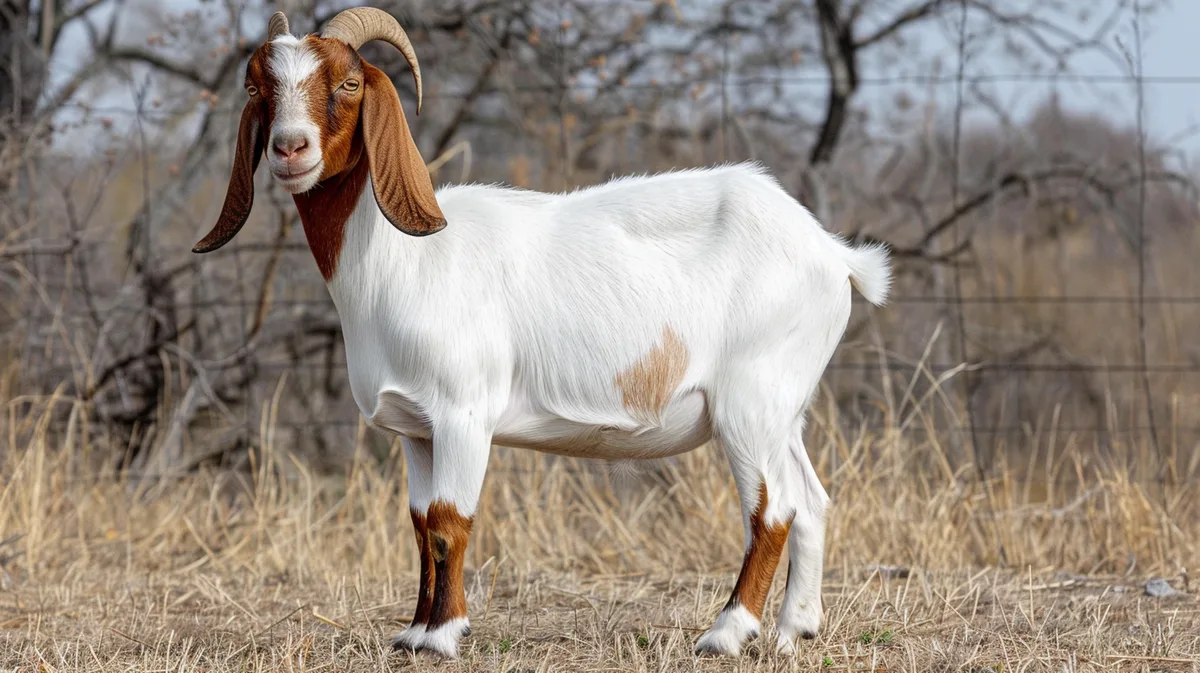
Boer goats are the most popular meat goat breed worldwide, and for good reason. Developed in South Africa, they’re bred specifically for meat production.
Characteristics
- Appearance: White body with distinctive red/brown head
- Size: Bucks 250-300+ lbs; Does 150-200 lbs
- Growth rate: Exceptional—kids can reach 50-80 lbs by weaning
- Temperament: Docile and easy to handle
Pros
- Fastest growth rate of any meat goat
- Excellent carcass quality
- Docile temperament
- Well-established market
Cons
- Higher purchase price
- May require more management
- Less parasite resistant than some breeds
- Can struggle in very harsh climates
Best for: Commercial meat production, show goats, crossbreeding programs
2. Kiko Goats
The Low-Maintenance Choice
Developed in New Zealand, Kiko goats were bred for hardiness and survival with minimal intervention. The name “Kiko” means “meat” in Maori.
Characteristics
- Appearance: Variable colors, often white or cream
- Size: Bucks 250-300 lbs; Does 120-150 lbs
- Growth rate: Good, slightly less than Boer
- Temperament: More independent than Boer
Pros
- Exceptional parasite resistance
- Low maintenance—thrive on neglect
- Excellent foragers
- Strong maternal instincts
- Good feet and legs
Cons
- Slightly slower growth than Boer
- Can be more flighty
- Less uniform appearance
- Smaller market recognition
Best for: Pasture-based systems, low-input farming, harsh environments
3. Savanna Goats
The Hardy White Meat Goat
Savanna goats originated in South Africa and were developed for hardiness in harsh conditions. They’re known for their heat tolerance and disease resistance.
Characteristics
- Appearance: All white with black skin (sun protection)
- Size: Bucks 200-250 lbs; Does 125-175 lbs
- Growth rate: Good, comparable to Kiko
- Temperament: Calm and docile
Pros
- Excellent heat tolerance
- Good parasite resistance
- Strong mothering ability
- Hardy and low maintenance
- Black skin prevents sunburn
Cons
- Less available than Boer
- Slightly smaller than Boer
- Higher initial cost
- Limited breed registry options
Best for: Hot climates, pasture systems, commercial production
4. Spanish Goats
The American Heritage Breed
Spanish goats descend from goats brought by Spanish explorers centuries ago. They developed naturally in the Americas, becoming extremely hardy and adaptable.
Characteristics
- Appearance: Variable—all colors and patterns
- Size: Bucks 150-200 lbs; Does 80-130 lbs
- Growth rate: Moderate
- Temperament: Can be wild if not handled
Pros
- Extremely hardy and adaptable
- Best parasite resistance
- Excellent browsers and brush clearers
- Low maintenance
- Historic American breed
Cons
- Slower growth rate
- Smaller carcass size
- Can be flighty if not handled
- Less uniform for market
Best for: Brush clearing, low-input systems, crossbreeding, conservation
5. Myotonic (Fainting) Goats
The Unique Meat Breed
Myotonic goats, also called Tennessee Fainting Goats, have a genetic condition causing temporary muscle stiffness when startled. This results in a higher muscle-to-bone ratio.
Characteristics
- Appearance: Variable colors, stocky build
- Size: Bucks 150-175 lbs; Does 80-120 lbs
- Growth rate: Moderate
- Temperament: Calm due to condition
Pros
- Higher meat-to-bone ratio
- Easy to contain (don’t jump fences)
- Docile temperament
- Good mothers
- Heritage breed status
Cons
- Smaller size
- Slower growth rate
- Ethical concerns for some buyers
- Limited availability
Best for: Small farms, heritage breed conservation, specialty markets
6. TexMaster Goats
The Composite Meat Breed
TexMaster is a composite breed developed by crossing Boer and Myotonic genetics, combining the best traits of both breeds.
Characteristics
- Appearance: Usually white with colored head
- Size: Bucks 200-250 lbs; Does 125-150 lbs
- Growth rate: Good
- Temperament: Docile
Pros
- Better muscle development than Boer
- Calmer than purebred Boer
- Good carcass quality
- Easier to contain
Cons
- Less recognized than Boer
- Limited availability
- Variable characteristics
- Smaller gene pool
Best for: Commercial meat production, small farms
7. Boer Crosses
The Practical Choice
Many commercial producers use Boer crosses, combining Boer genetics with hardier breeds for the best of both worlds.
Common Crosses
- Boer x Kiko: Growth + hardiness
- Boer x Spanish: Growth + parasite resistance
- Boer x Savanna: Growth + heat tolerance
Pros
- Hybrid vigor benefits
- Balances growth with hardiness
- Often more affordable
- Practical for commercial production
Cons
- Variable offspring
- Can’t register as purebred
- Less predictable traits
Best for: Commercial production, maximizing hybrid vigor
Breed Comparison Table
| Breed | Growth Rate | Hardiness | Parasite Resistance | Size | Availability |
|---|---|---|---|---|---|
| Boer | Excellent | Moderate | Moderate | Large | Common |
| Kiko | Good | Excellent | Excellent | Medium-Large | Good |
| Savanna | Good | Excellent | Good | Medium-Large | Limited |
| Spanish | Moderate | Excellent | Excellent | Medium | Good |
| Myotonic | Moderate | Good | Good | Small-Medium | Limited |
| TexMaster | Good | Good | Good | Medium-Large | Limited |
Choosing the Right Breed
Consider Your Climate
- Hot/humid: Savanna, Spanish, or Kiko
- Cold: Spanish or Boer crosses
- Variable: Kiko or Spanish
Consider Your Management Style
- High input/intensive: Boer
- Low input/extensive: Kiko, Spanish, or Savanna
- Moderate: Boer crosses or Savanna
Consider Your Market
- Premium buyers: Purebred Boer
- Ethnic markets: Any breed with good size
- Local/direct: Personal preference matters
Getting Started
- Research local markets: What breeds sell well in your area?
- Assess your land: Brush-heavy or open pasture?
- Evaluate your time: How much management can you provide?
- Visit breeders: See different breeds in person
- Start small: Begin with 5-10 does to learn
Conclusion
There’s no single “best” meat goat breed—the right choice depends on your specific situation. Boer goats offer the fastest growth, Kiko and Spanish provide the best hardiness, and crosses can give you the best of both worlds.
Ready to find meat goat breeders? Browse our directory to connect with farms near you.
Want to learn more about specific breeds? Check out our breed guide for detailed information on each breed.
Enjoyed this article?
Subscribe to get more farming tips and guides delivered to your inbox.
Related Articles

Complete Beginner's Guide to Raising Sheep
Everything you need to know to start your sheep farming journey, from choosing breeds to basic care and management.
Read More
Goat Farming for Beginners: Everything You Need to Know
A comprehensive introduction to goat farming covering breeds, housing, feeding, and health management for new farmers.
Read More