How Much Land Do You Need for Sheep? (Acreage Calculator)
Wondering how many sheep you can raise per acre? Learn about stocking rates, pasture management, and land requirements for sheep farming.
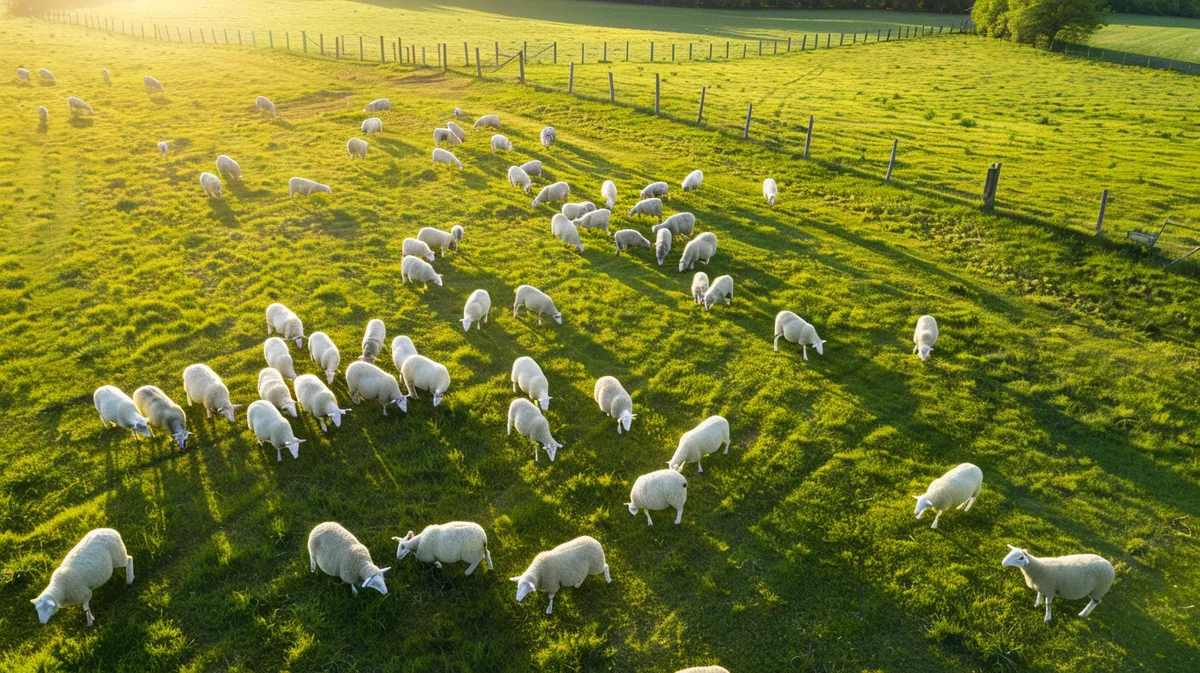
How Much Land Do You Need for Sheep?
One of the first questions aspiring shepherds ask is: “How many sheep can I raise on my land?” The answer depends on several factors, from pasture quality to climate. This guide will help you calculate the right stocking rate for your property.
The Quick Answer
General rule of thumb: 2-6 sheep per acre on well-managed pasture.
But this varies significantly based on:
- Pasture quality and forage type
- Annual rainfall
- Soil fertility
- Management practices
- Supplemental feeding plans
Understanding Stocking Rates
A stocking rate is the number of animals per unit of land over time. It’s typically expressed as:
- Sheep per acre
- Acres per sheep
- Animal Unit Months (AUM)
Regional Stocking Rate Guidelines
| Region | Rainfall | Sheep per Acre |
|---|---|---|
| Northeast/Southeast | 40+ inches | 4-6 sheep |
| Midwest | 30-40 inches | 3-5 sheep |
| Great Plains | 15-30 inches | 1-3 sheep |
| Arid West | Under 15 inches | 0.5-1 sheep |
| Pacific Northwest | 40+ inches | 4-6 sheep |
Factors That Affect Land Requirements
1. Pasture Quality
Improved pasture (seeded with quality forages):
- Can support 4-6 sheep per acre
- Requires fertilization and management
- Higher carrying capacity
Native/unimproved pasture:
- Supports 2-4 sheep per acre
- More variable production
- Lower input costs
Marginal land (brush, poor soils):
- May only support 1-2 sheep per acre
- Consider goats for brush clearing
- Supplemental feed likely needed
2. Climate and Rainfall
Water availability directly impacts forage production:
- 40+ inches annual rainfall: Peak production potential
- 20-40 inches: Moderate production; seasonal variability
- Under 20 inches: Limited production; irrigation may help
Seasonal considerations:
- Summer drought reduces carrying capacity
- Winter may require hay feeding
- Spring flush may allow temporary higher stocking
3. Sheep Type and Size
Different sheep require different amounts of forage:
| Sheep Type | Daily Forage Needs |
|---|---|
| Ewe with lambs | 4-5% of body weight |
| Dry ewe | 2-3% of body weight |
| Ram | 2-3% of body weight |
| Growing lambs | 3-4% of body weight |
Larger breeds (Suffolk, Hampshire) need more land than smaller breeds (Shetland, Soay).
4. Breeding Status
A ewe’s nutritional needs change throughout the year:
- Maintenance: Lowest requirements
- Late pregnancy: 50% increase
- Lactation: 100% increase (doubles!)
Plan for peak demand when calculating stocking rates.
Calculating Your Stocking Rate
Step-by-Step Method
Step 1: Determine your pasture productivity
- Contact your local extension office for area averages
- Or estimate: 2,000-6,000 lbs dry matter/acre/year
Step 2: Calculate animal needs
- Average sheep needs ~3 lbs dry matter/day
- Annual need: 3 × 365 = 1,095 lbs/sheep/year
Step 3: Apply a utilization rate (don’t graze 100%)
- Sustainable utilization: 50-70%
- Example: 4,000 lbs production × 0.60 = 2,400 lbs available
Step 4: Calculate capacity
- 2,400 lbs available ÷ 1,095 lbs/sheep = 2.2 sheep/acre
Quick Calculator
| Pasture Quality | Production (lbs/acre) | Sheep per Acre |
|---|---|---|
| Excellent | 6,000+ | 4-6 |
| Good | 4,000-6,000 | 3-4 |
| Average | 2,500-4,000 | 2-3 |
| Poor | 1,500-2,500 | 1-2 |
| Very Poor | Under 1,500 | <1 |
Management Practices That Increase Capacity
Rotational Grazing
Dividing pastures and rotating sheep can increase carrying capacity by 25-50%.
Benefits:
- Better pasture recovery
- Reduced parasite pressure
- More uniform grazing
- Higher forage production
Example rotation:
- 3-7 days grazing per paddock
- 21-30 days rest before return
- Minimum 4-6 paddocks recommended
Pasture Improvement
Investments that pay off:
- Soil testing and fertilization: Can double production
- Overseeding with quality forages: Improves nutrition
- Weed control: Increases usable forage
- Water distribution: Encourages even grazing
Supplemental Feeding
Hay or grain allows higher stocking rates:
- Expect to provide hay 3-5 months in northern climates
- Budget 3-4 lbs hay per sheep per day
- Allows year-round production on less land
Minimum Land Requirements
Absolute Minimums
While not ideal for grazing-only systems:
- 3-5 sheep: 0.5-1 acre (with supplemental hay)
- 10-20 sheep: 2-5 acres
- 50 sheep: 10-25 acres
- 100 sheep: 20-50 acres
Recommended Minimums (Self-Sustaining)
For year-round grazing with minimal supplements:
- 5 sheep: 1-2 acres
- 10 sheep: 3-5 acres
- 25 sheep: 8-15 acres
- 50 sheep: 15-30 acres
Common Mistakes to Avoid
1. Overstocking
Signs of overstocking:
- Pastures grazed too short (under 3 inches)
- Bare ground visible
- Weeds taking over
- Poor animal condition
- Increased parasite problems
Solution: Reduce numbers or increase hay feeding
2. Understocking
Less common but also problematic:
- Grass becomes too mature
- Weeds and brush encroach
- Forage quality decreases
- Land not used efficiently
Solution: Add animals, mow excess, or make hay
3. Ignoring Seasonal Variation
Spring growth can be 10x winter production. Plan for:
- Stockpiling fall growth for winter
- Making hay during spring surplus
- Adjusting numbers seasonally if possible
Special Considerations
Hair Sheep vs. Wool Sheep
Hair sheep (Katahdin, Dorper) typically:
- Handle heat better
- May graze more efficiently
- Similar land requirements
Lambing Season
Plan for increased needs during lambing:
- Ewes with twins need more forage
- May need to reduce numbers during lactation
- Or plan supplemental feeding
Multi-Species Grazing
Combining sheep with cattle can increase total capacity:
- Sheep eat what cattle leave
- Different grazing patterns complement each other
- Can increase land use efficiency by 20-30%
Example Scenarios
Scenario 1: Small Hobby Farm
Land: 5 acres, good pasture, Northeast Goal: Small flock for meat/wool
Recommendation: 15-20 sheep with rotational grazing and winter hay feeding.
Scenario 2: Part-Time Farm
Land: 20 acres, average pasture, Midwest Goal: Small commercial flock
Recommendation: 40-60 sheep with rotational grazing, stockpiled forage for winter.
Scenario 3: Dry Climate
Land: 40 acres, native range, West Texas Goal: Low-input meat production
Recommendation: 20-40 sheep, hair sheep breeds, extensive grazing, supplemental hay during drought.
Getting Started
- Soil test your pastures: Know what you’re working with
- Contact local extension: Get area-specific recommendations
- Start conservatively: Easier to add sheep than remove
- Monitor pasture condition: Adjust as you learn
- Plan for hay: Budget for supplemental feed
Conclusion
Most small farms can successfully raise sheep with proper planning. Start with conservative stocking rates, improve your pastures over time, and adjust based on what you observe. Remember: it’s better to have too few sheep than too many.
Need to find sheep to stock your farm? Browse our breeder directory to connect with farms in your area.
Looking for breed recommendations? Check out our guide to the best sheep breeds for beginners.
Enjoyed this article?
Subscribe to get more farming tips and guides delivered to your inbox.
Related Articles

Complete Beginner's Guide to Raising Sheep
Everything you need to know to start your sheep farming journey, from choosing breeds to basic care and management.
Read More
Goat Farming for Beginners: Everything You Need to Know
A comprehensive introduction to goat farming covering breeds, housing, feeding, and health management for new farmers.
Read More